A pan-European leader with a digital presence that didn't reflect it
Norstat had spent decades building something genuinely impressive: a market research operation spanning 19 countries, trusted by over 1,800 clients, with access to millions of respondents across Europe. The product was authoritative. The reputation was earned.
But the website told a more complicated story. Operating across markets with different languages, search behaviors, and audience expectations, Norstat's digital presence had grown fragmented. The challenge of serving a global audience with locally relevant content, without sacrificing coherence or SEO performance, had never been fully solved.
For a company whose entire value proposition is built on data quality and precision, a website that couldn't clearly communicate that to the right audience in the right market was a material problem. Enterprise clients, research agencies, and procurement teams evaluate digital presence as a proxy for operational credibility. The site needed to match the company it represented.
Strategy and website: built for global reach and local relevance
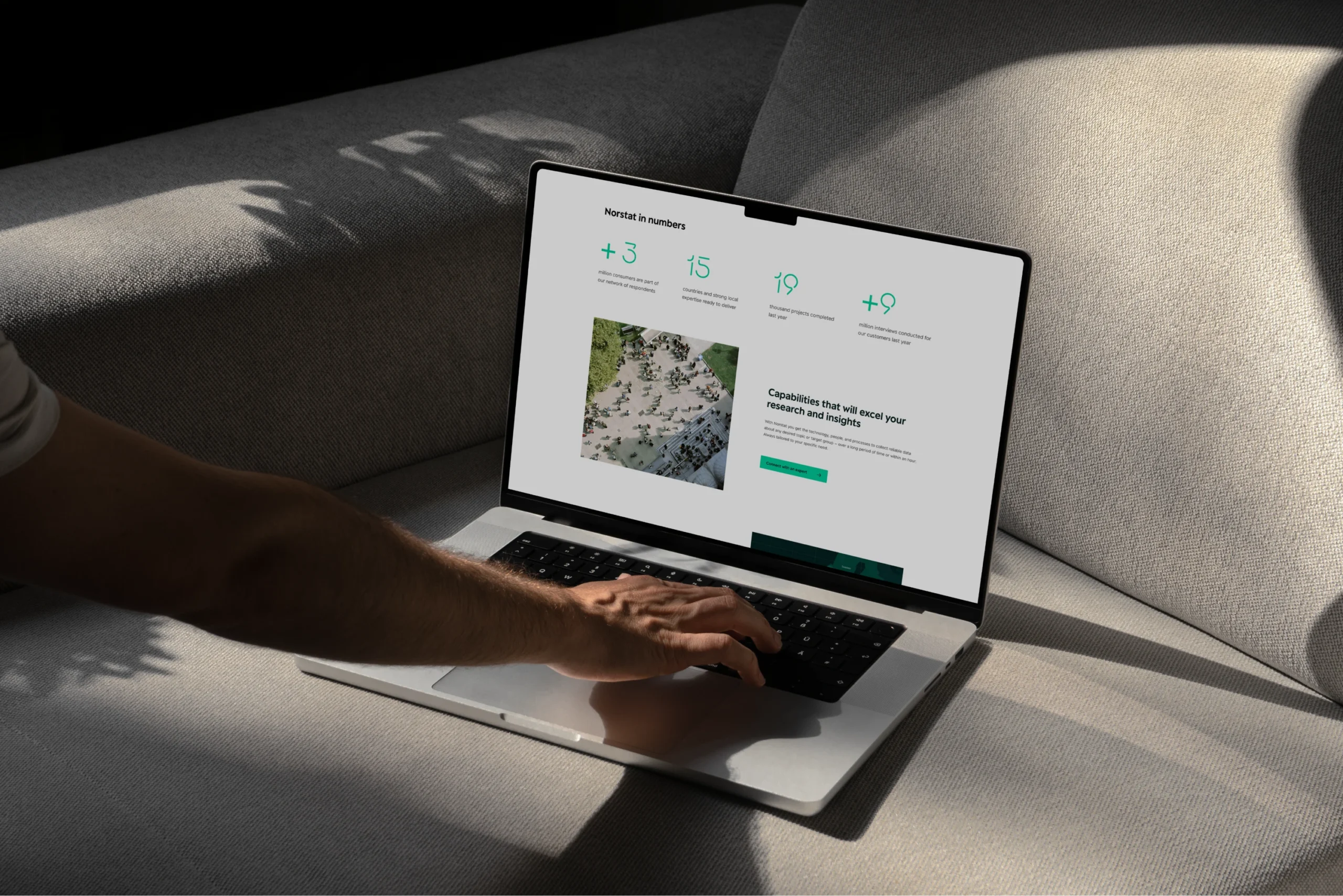
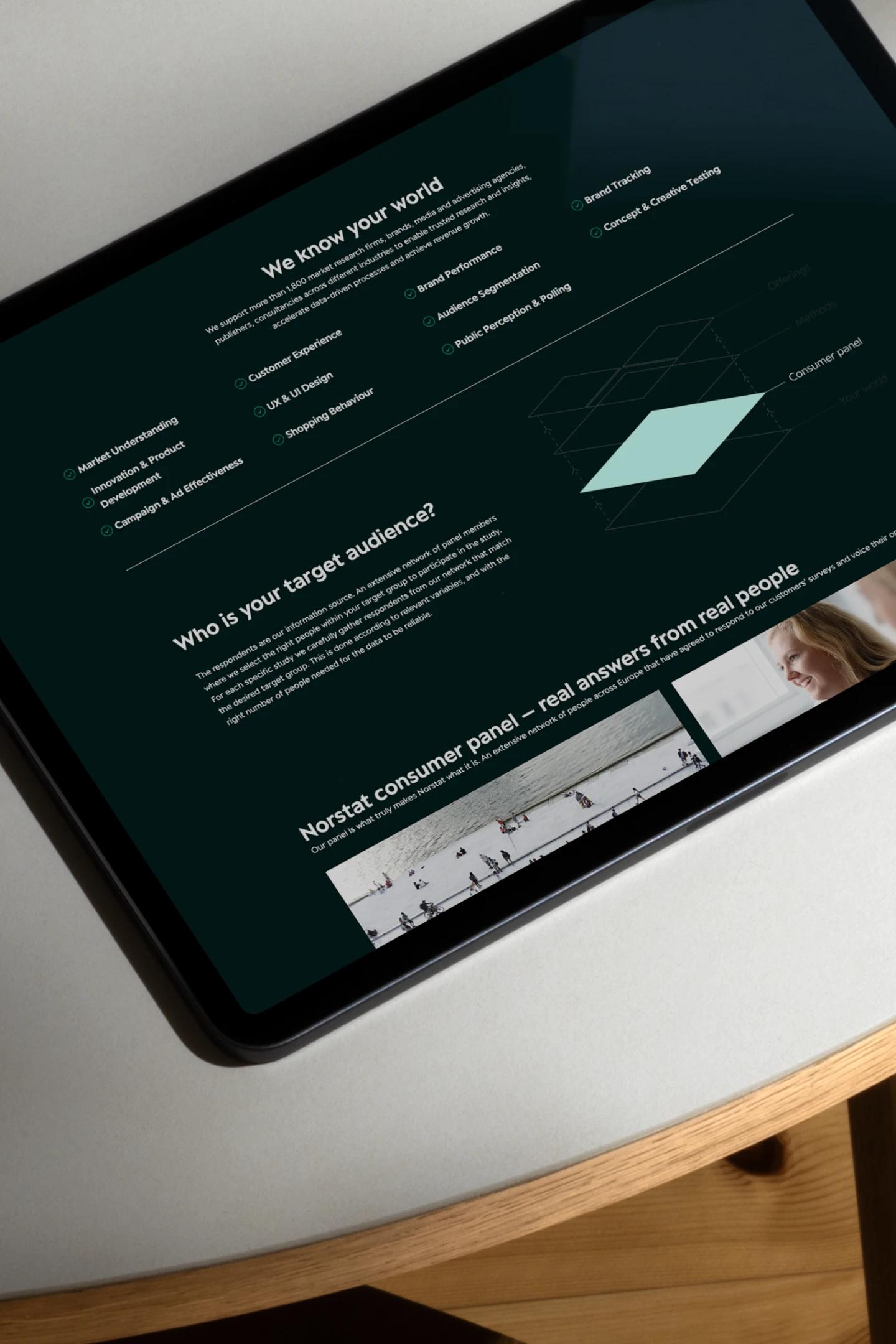
The engagement covered strategy and a full website overhaul. The strategic challenge was the defining one: how to build a single, unified digital presence that could serve multiple markets without becoming generic to all of them.
The answer was a glocal architecture, one unified website structure with the flexibility to deliver localised, translated content market by market. A single domain strategy replaced the complexity of geo-based redirects, streamlining user experience and consolidating SEO authority in one place rather than fragmenting it across multiple properties.
Content was structured to serve two distinct audiences simultaneously: buyers new to market research who needed clear, accessible explanations of what Norstat does and why it matters, and experienced research professionals who needed depth, detail, and confidence in the methodology. Clear navigation and information hierarchy ensured neither audience had to work to find what they came for.
SEO was treated as a strategic priority from the start, not a post-launch consideration. Local search terms, market-specific content, and a consolidated domain structure were all designed to improve visibility in the markets that matter most to Norstat's growth.
159% more keywords. 32% more traffic. One unified platform.
The numbers validate the strategy. A 159% increase in total keywords ranked and 32% growth in organic traffic from Google, driven by a localised SEO approach that improved both visibility and engagement across key markets. Norstat's digital presence now reflects what the company has always been: a pan-European leader that understands both the global picture and the local detail.
“This project was more than a website redesign. It was a strategic initiative to position Norstat as a market research leader, adept in technological advancement and global market understanding.”
— Tor Nettelbladt, CEO and Digital Strategist