Brand strategy before product-market fit
⚡ Quick Answer
How should an early-stage startup approach brand strategy before finding product-market fit?
Early-stage companies should separate brand decisions into fixed invariants and fluid elements. Fix things early that create continuity through pivots (name, core visual identity, and verbal tone) while keeping positioning specifics, target audience, and detailed narrative loosely held and regularly revised. This avoids both the brand debt of making no decisions and the trap of premature positioning that constrains you as you learn.

Most brand strategy advice assumes you know what you are.
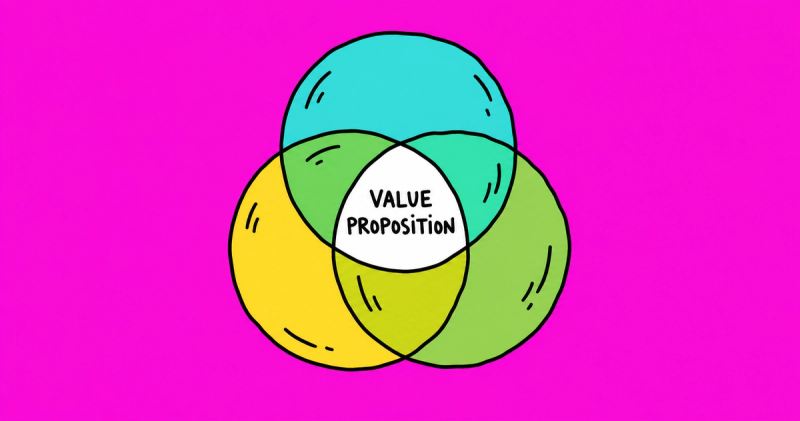
Define your positioning. Articulate your value proposition. Identify your target audience. Develop your brand personality. The frameworks are clean, the deliverables are tangible, and the process is well-documented.
But what if you don’t actually know what you are yet?
This is the reality for early-stage companies. You have a hypothesis, maybe some early traction, but the product is shifting, the market is uncertain, and what you’ll become in two years might be quite different from what you are today. Traditional brand strategy asks you to commit to answers you don’t yet have.
The result is one of two failure modes. Either you skip brand work entirely, leaving identity to chance and accumulating brand debt. Or you do the work prematurely, locking yourself into a positioning that becomes obsolete as you learn and pivot.
There’s a third way: brand strategy designed for uncertainty.
The problem with premature positioning
Traditional positioning demands specificity. You’re the blank for blank who want blank. You occupy a defined space relative to defined competitors. Your differentiation is clear and stable.
For a company that’s still searching for product-market fit, this specificity is a trap.
You might position against competitors who turn out to be irrelevant to your actual market. You might define a target customer who isn’t your best customer. You might commit to a value proposition that your product can’t yet deliver, or that the market doesn’t actually want.
Worse, premature positioning creates internal constraints. Once you’ve told yourself a story about who you are, it becomes harder to see opportunities outside that story. The brand strategy that was meant to focus you ends up limiting you.
Plenty of successful companies look nothing like their original positioning. Slack was a gaming company. YouTube was a dating site. Instagram was a location check-in app. If any of them had done deep brand strategy work in their first year, they’d have been solving the wrong problem.
The problem with no positioning
But the opposite approach (just build the product, brand can wait) creates its own problems.
Without any brand thinking, you make identity decisions by default rather than by design. Someone picks a name under time pressure. Someone chooses colors because they like them. Messaging varies across every touchpoint because there’s no shared foundation.
These unintentional decisions accumulate. They become harder to change as more collateral is built on top of them. They create confusion. Internal teams don’t know how to talk about what they do, external audiences get inconsistent signals.
You end up with brand debt: the compound cost of all the brand decisions you didn’t make intentionally. Paying down that debt later (rebranding, repositioning, rebuilding consistency) is expensive and disruptive.
What to fix, what to leave fluid
The solution is to distinguish between brand decisions that need to be made early and those that should stay flexible.
Fix early: the invariants. Some things should stay constant even as your product and positioning evolve. Your company name (ideally). Your core visual identifiers: logo, primary colors, typeface. Your verbal tone, how you sound, even if what you say changes. These create recognition and continuity through pivots.
Leave fluid: the positioning specifics. Who exactly you’re for. What exactly you do. How you compare to competitors. What market you’re in. These should evolve as you learn. Document your current thinking, but hold it loosely.
Fix early: brand principles, not brand promises. You might not know what your product will become, but you probably know what you value. Speed. Simplicity. Craft. Honesty. These principles can guide decisions without constraining what you build. They’re about how you do things, not what you do.
Leave fluid: the detailed narrative. The origin story, the mission statement, the detailed value proposition. These can and should evolve. Having a placeholder is fine. Investing heavily in narrative you’ll need to rewrite is waste.
A framework for early-stage brand
Here’s a minimal brand framework for companies that haven’t found product-market fit.
Name and domain. Make this decision carefully even if you make others loosely. Changing your name is expensive and disruptive. Choose something that can contain multitudes, that won’t constrain you to a specific product or market. Own the domain and key handles.
Visual identity at 80%. You need enough visual identity to look legitimate, but not so much that you’re locked in. A simple logo, a limited color palette, one or two typefaces, basic guidelines. Avoid elaborate illustration systems, complex visual languages, or anything that requires significant investment to change.
Tone, not script. Define how you sound, not what you say. Are you formal or casual? Technical or accessible? Serious or playful? Tone can stay consistent even as messaging evolves.
Working positioning. Document your current best understanding of who you’re for and why you matter. Make it explicit that this is a hypothesis. Review and revise it regularly as you learn.
Principles over promises. Articulate what you believe in and how you want to operate. These are internal guideposts, not external marketing. They help with decisions without committing to specifics.
Living in ambiguity
This approach requires comfort with ambiguity. You’re not going to have a polished brand book or a confident positioning statement. You’re going to have a work in progress.
That’s fine. That’s honest. You’re a work in progress.
The goal is to maintain enough coherence to build recognition and trust, while preserving enough flexibility to evolve as you learn. You’re not locking in answers. You’re creating a container that can hold different answers as you discover them.
Some practical implications:
Don’t invest heavily in collateral that embeds positioning. A website that’s easy to update is better than a website that’s beautifully produced but frozen. Messaging that lives in editable documents is better than messaging cast in expensive video.
Do invest in the invariants. A good name, a distinctive logo, a clear visual style. These are worth getting right because they travel with you through changes.
Build brand rituals that accommodate change. Regular positioning reviews. Message testing with real customers. Explicit “this is what we think now, not what we’re committed to forever” framing.
When to lock in
At some point, you find product-market fit. You know who you serve, what you offer, and why you win. The hypothesis becomes conviction.
That’s when traditional brand strategy becomes appropriate. That’s when you can invest in detailed positioning, in elaborate visual systems, in comprehensive messaging, in expensive production.
The transition isn’t always obvious. Some companies realize in retrospect that they found fit months before they acknowledged it. Others lock in prematurely, convinced they’ve found fit when they’ve only found a local maximum.
A useful test: can you describe your best customer with specificity? Not a persona deck’s worth of demographics, but a genuine understanding of who thrives with your product. If yes, you might be ready to lock in. If you’re still discovering who your best customer is, stay flexible.
The courage to be unfinished
Early-stage branding requires a kind of courage: the courage to be publicly unfinished.
Sophisticated audiences understand this. Investors, early-adopter customers, talent who join startups. They know they’re betting on potential, not polish. An honest “we’re still figuring this out” is more credible than a premature “we’ve got it all figured out.”
The risk is that you look unserious. The mitigation is quality in execution. You can be unfinished in your positioning while being excellent in your craft. A simple logo that’s well-designed. Copy that’s clear and well-written even if the messaging evolves. A website that’s minimal but polished.
The point isn’t to be sloppy. The point is to invest your polish in things that will last, and hold loosely the things that might change. That’s brand strategy for the uncertain, which is to say, brand strategy for how companies actually work.
| Brand Element | Category | Recommendation | Purpose | Example |
|---|---|---|---|---|
| Company Name | Name/Identity | Fix Early | Ensures continuity and avoids costly changes | Choose a broad, flexible name |
| Logo & Visual Style | Visual Identity | Fix Early (at ~80%) | Build legitimacy and recognition while allowing change | Simple logo, limited color palette |
| Verbal Tone | Messaging | Fix Early | Maintains consistent voice despite evolving messages | Formal, casual, playful, etc. |
| Positioning Statement | Market Positioning | Leave Fluid | Evolves with product-market fit discovery | Current hypothesis of who the product serves |
| Value Proposition | Market Positioning | Leave Fluid | Adapts as product capabilities and market needs change | Benefits promised to target customers |
| Brand Principles | Internal Guidance | Fix Early | Guides decision-making without constraining pivot | Values like honesty, speed, simplicity |
| Mission Statement & Narrative | Storytelling | Leave Fluid | Refines as company learns and evolves | Placeholder statements that evolve over time |
| Note: Fixing too many elements early risks premature commitment; leaving too many fluid incurs brand debt. | ||||